
24 Feb, 2026
Wild Buffaloes Return to Kanha After Nearly 50 Years Since Their Disappearance in 1979
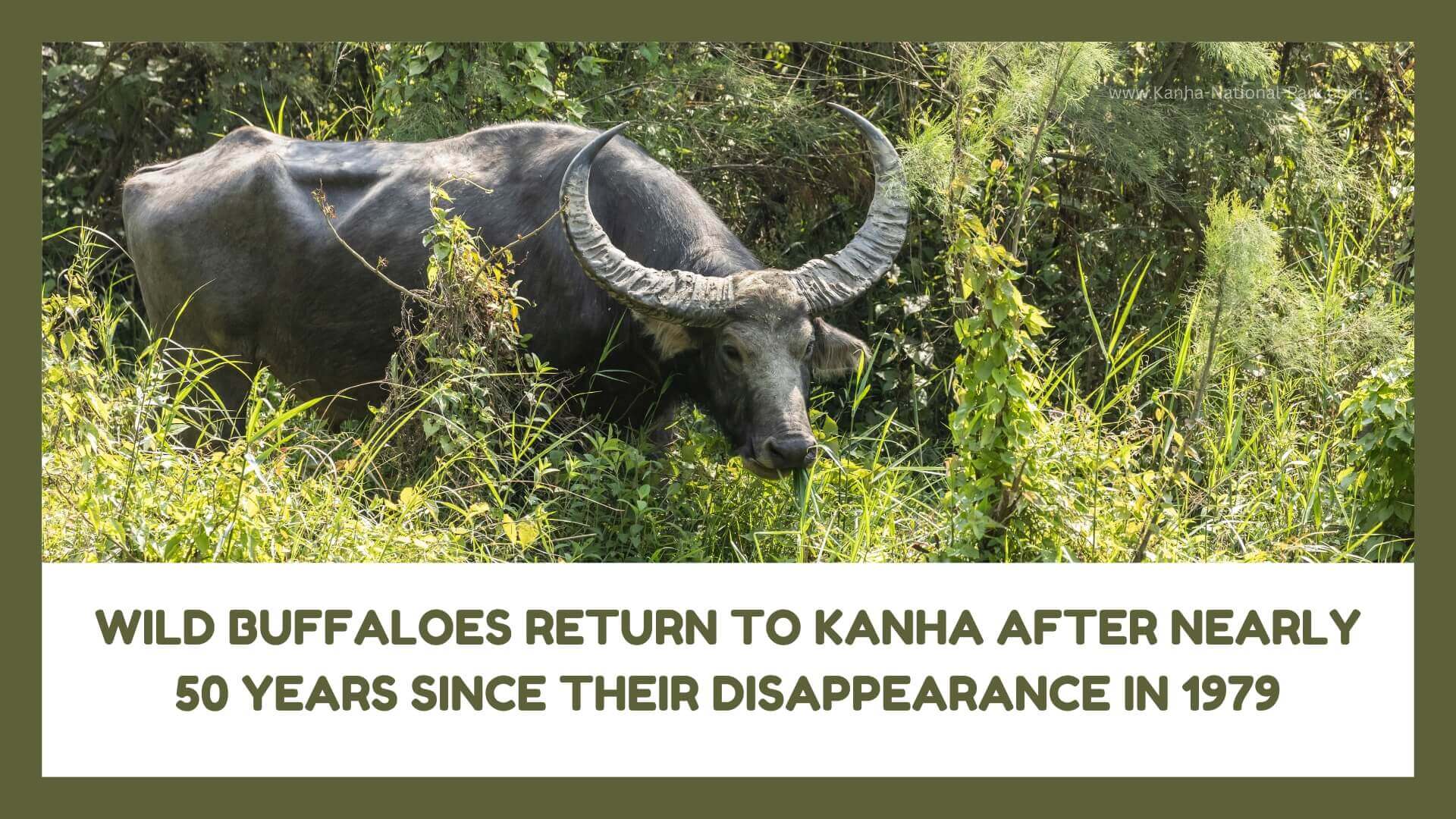
In what is considered a significant conservation project, wild buffaloes are set to return to central India’s Kanha Tiger Reserve for the first time since 1979; nearly 50 years after they were last seen in the forests of Madhya Pradesh. Up to 15 endangered wild buffaloes from Kaziranga National Park in Assam will be transported via road to the Kanha Tiger Reserve over a distance of approximately 2,000 km, under strict veterinary supervision, with an estimated arrival at Kanha by early March 2026.
This initiative is part of a long-term strategy to restore a sustainable population of buffalo within its historic range through coordinated efforts by scientific studies and collaborative conservation planning among the forest departments of Assam and Madhya Pradesh, the Wildlife Institute of India, the National Tiger Conservation Authority, and the Central Zoo Authority.
Reintroducing the Wild Buffalo: Plans, Purpose & Promise
The wild buffalo (Bubalus arnee) previously inhabited a large area of central India, including Mandla, Balaghat, Amarkantak, and the Satpura Ranges. Evidence of their existence even found in the Bhimbetka rock shelters; a UNESCO World Heritage site. In the last 100+ years, hunting, habitat destruction, and human encroachment with the environment have all contributed to the extinction of wild buffalo in Madhya Pradesh. Currently, India’s remaining wild buffalo population is primarily concentrated in Assam’s Kaziranga and Manas parks, with an estimated global wild population remaining of fewer than 4,000.
The Kanha Tiger Reserve has been recognized as a prime location for the reintroduction of tigers due to its grassland and wetland ecosystems, as well as for its strong protection measures. Actions to prepare for the reintroductive process include soft-release enclosures for acclimatisation and phased releases over the next decade to ensure adequate genetic diversity within the reintroduced population and to provide for the long-term sustainability of the population.
As part of an interstate wildlife collaboration effort, over the next three years, Assam will send around 50 wild buffaloes to Madhya Pradesh and other species, including rhinos and cobras. In return, Madhya Pradesh will send tigers and crocodiles to Assam.
The reintroduction of wild buffaloes is more than symbolic; their presence can have an important ecological role that contributes to the regeneration of grasslands, nutrient cycling and habitat dynamics, which can also support the presence of other herbivores and large predators in the reserve.



 Share
Share Home
Home Packages
 Book Now